
From Orbit to Your Pocket: Starlink Takes Aim at America's Phone Bill
SpaceX is assembling the spectrum, satellites and towers to become a full-fledged U.S. wireless carrier — and the country that builds the next phone network in space will set the rules for everyone else.
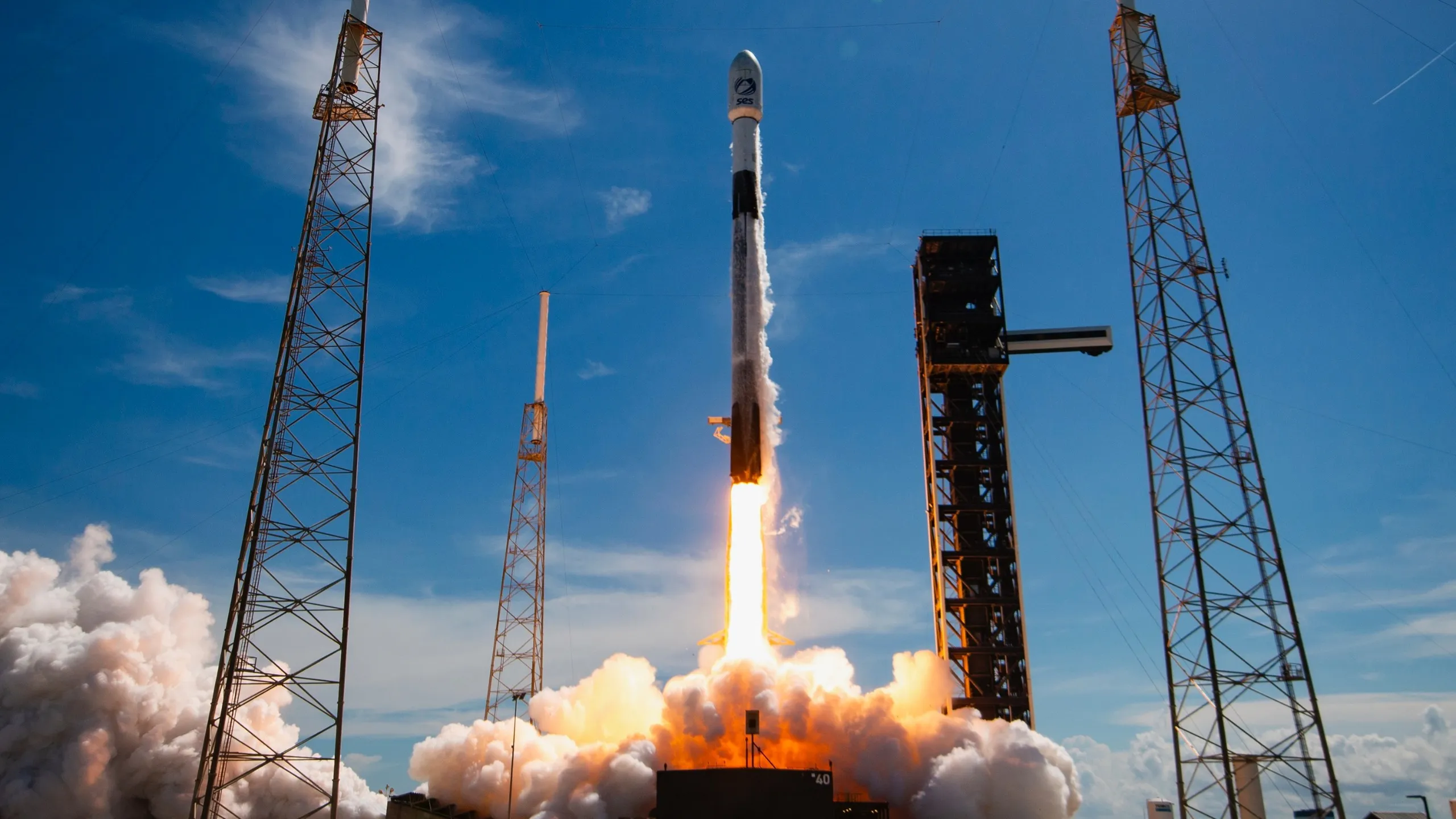
For three decades, the American wireless market has belonged to a short list of companies. AT&T, Verizon and T-Mobile own the towers, the airwaves and the monthly bill that nearly every adult in the country pays. This month, an American rocket company announced it intends to change that.
On October 8, SpaceX said it had agreed to acquire a nationwide portfolio of low-band spectrum licenses that will let its Starlink division become, in the company’s words, a “major mobile carrier in the US.” A day later, the Federal Communications Commission approved SpaceX’s next-generation satellite-to-phone constellation of roughly 15,000 satellites, each designed to carry about 100 times the bandwidth of the current fleet. Shares of the three incumbent carriers fell about 7% in after-hours trading on the news.
The message to Wall Street, and to the incumbents, was hard to miss: a fourth national carrier is coming, and it is being built from orbit down.
How the Pieces Fit Together
Starlink Mobile is not a single product announcement. It is a stack of assets SpaceX has spent more than a year assembling.
The airwaves. In September 2025, SpaceX agreed to buy EchoStar’s AWS-4 and H-block licenses in a deal worth about $17 billion, split evenly between cash and SpaceX stock, giving it 50 MHz of exclusive S-band spectrum in the U.S. plus global mobile-satellite licenses. That spectrum is the high-capacity data layer. The new 800 MHz low-band purchase is the coverage layer. Low-band signals travel farther and pass through walls, and SpaceX says most phones already on the market support the band.
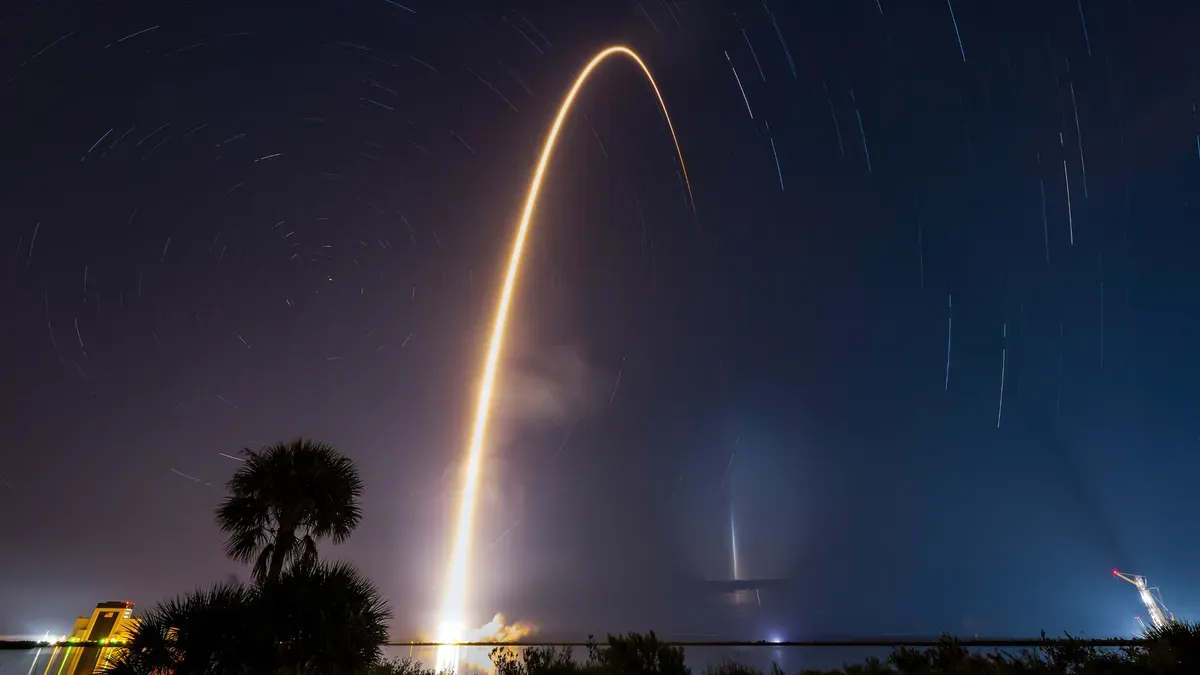
The satellites. Roughly 650 direct-to-cell Starlink satellites are already in orbit, acting as “cell towers in space.” The FCC-approved second generation uses larger phased-array antennas and custom chips aimed at 5G-class speeds straight to an ordinary, unmodified smartphone. SpaceX plans to begin launching them in 2027.
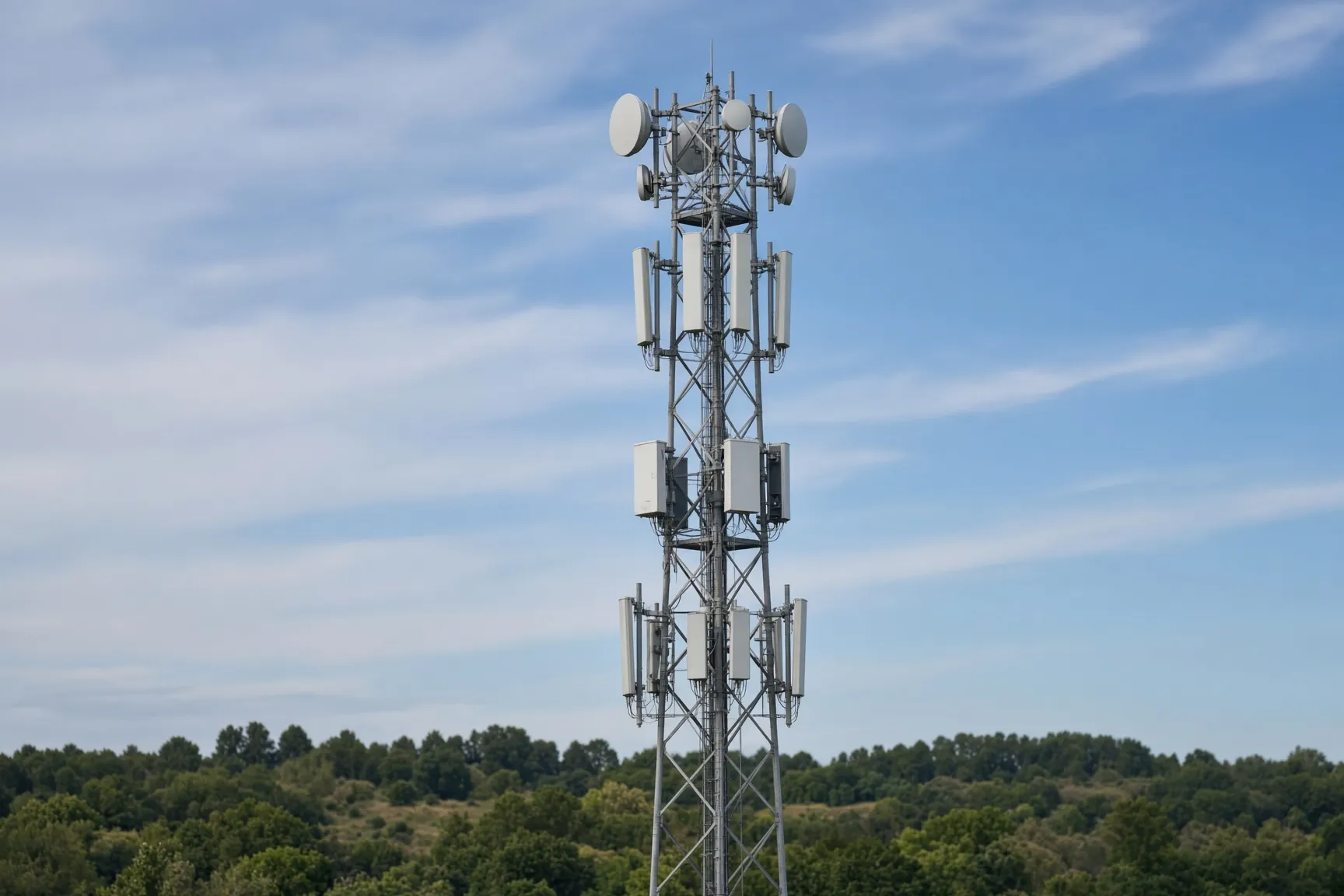
The ground network. Satellites alone cannot carry a city’s worth of traffic, and SpaceX knows it. President Gwynne Shotwell has floated large numbers of low-cost base stations paired with Starlink dishes in place of traditional towers.
The target for an integrated consumer service is early 2028. Pricing and plans have not been announced.
Why the Incumbents Are Nervous
SpaceX did not start out as a rival to the carriers. It started as a partner. T-Mobile launched its Starlink-powered T-Satellite service commercially in July 2025, and the companies say it has added coverage to roughly 500,000 square miles of the U.S. that towers never reached.
But when SpaceX sought wholesale access to the big carriers’ networks so it could sell its own service, it was turned down. The carriers then moved to hedge. In May, AT&T, Verizon and T-Mobile announced a rare joint venture to pool their spectrum and create a common platform that any satellite operator can plug into; the venture formally launched this month with industry veteran Paul Roth as interim CEO. On October 1, T-Mobile quietly removed Starlink branding from its satellite service website.
The carriers describe the joint venture as a way to give customers more choice and make satellite providers easier to swap. Read another way, it is the incumbents making sure no single satellite company — especially one that now wants their customers — controls the link between orbit and the American handset.
SpaceX enters this fight from a position of financial strength. Starlink had 13.6 million consumer subscribers as of September 30, and its connectivity segment reported $5.25 billion in third-quarter revenue and $2.37 billion in operating income.
The Competition
Starlink is not the only company trying to hang a cell tower in orbit, and the incumbents are not standing still. The race for the American phone now has four distinct camps.
The Big Three. AT&T, Verizon and T-Mobile still hold the advantages that matter most on day one: deep spectrum holdings, tens of thousands of towers, retail stores, family plans and phone financing. Their new satellite joint venture is a defensive play — by setting a common standard, it lets them treat satellite operators as interchangeable suppliers rather than rivals. T-Mobile remains Starlink’s partner for now, but it is clearly hedging.
AST SpaceMobile. The Midland, Texas, company is Starlink’s most direct satellite-to-phone rival and is backed by partnerships with AT&T and Verizon. It won FCC authority in May to offer commercial direct-to-device service in the U.S. using up to 248 satellites, and has reported peak test speeds near 99 Mbps from orbit. Its approach is the opposite of Starlink’s: a smaller fleet of enormous satellites — its BlueBird 6 array spans roughly 2,400 square feet — sold through existing carriers rather than as a carrier of its own. The challenge is scale. AST has only a fraction of its planned fleet in orbit and is targeting 45 to 60 satellites by the end of this year, and some of those launches ride on SpaceX’s own Falcon 9.
Amazon Leo. Formerly Project Kuiper, Amazon’s network entered the phone race in April with an agreement to buy Globalstar for about $11.6 billion, a deal expected to close in 2027. Apple, which relies on Globalstar for iPhone emergency satellite features, signed on to use Amazon Leo for future iPhones and Apple Watches. In July, Amazon asked the FCC to approve up to 5,105 direct-to-device satellites, with deployment starting in 2028. Amazon has the balance sheet to compete, but it is far behind in orbit — roughly 390 broadband satellites versus Starlink’s thousands — and its phone service is initially aimed at voice, messaging and emergency use rather than full mobile broadband. FCC Chairman Brendan Carr publicly told Amazon to focus on its own launch pace before complaining about SpaceX’s.
The niche players. Skylo, which powers satellite messaging on Google Pixel phones and for Verizon, is extending texting to more Android devices on Globalstar’s next-generation satellites starting in 2027. Lynk Global is pursuing carrier partnerships, and Rocket Lab agreed in June to acquire legacy satellite-phone operator Iridium for $8 billion. These services focus on texting and emergencies, not on replacing your carrier.
What separates SpaceX from the field is vertical integration. It designs and builds its own satellites, launches them on its own reusable rockets, now owns its own spectrum, and is assembling its own ground network. Every rival depends on someone else for at least one of those pieces — and in several cases that someone is SpaceX. For American consumers, the encouraging part is that every serious contender for the U.S. market is an American company. The competition that drives prices down and coverage out is happening on home soil.
The America-First Case
Strip away the stock-market drama and the stakes become clearer. Starlink Mobile matters to the country for four reasons.
It finishes the job in rural America. Millions of Americans still lose signal on county roads, in farm country, on tribal lands and in the backcountry. Wiring every valley with towers has never penciled out for carriers whose shareholders want returns from dense metros. A network designed from space up treats the whole country as its coverage map, not just the profitable parts.
It hardens national infrastructure. Hurricanes, wildfires and grid failures routinely knock out towers exactly when Americans need to call for help. A network with a layer in orbit doesn’t go down when a county’s fiber and power do.
It puts idle American spectrum to work. The EchoStar airwaves sat largely underused for years, drawing FCC scrutiny over unmet buildout obligations. Moving them to a company that will actually light them up is exactly the kind of outcome spectrum policy is supposed to produce.
It keeps the next network American. China is racing to build its own phone-to-satellite systems. The state-owned Guowang constellation plans 310 launches this year, 900 next year and 3,600 a year from 2028. The Shanghai-backed Qianfan network has more than 200 satellites up and launched its first direct-to-phone test satellite in June. Beijing has set a goal of more than 10 million satellite communications users by 2030, and a Chinese-led 6G satellite report was adopted by the International Telecommunication Union in May. Whoever deploys first and at scale will shape the global standards — and decide whose hardware the world’s phones talk to.
Right now, America holds the lead. Starlink accounts for roughly three-quarters of all active maneuverable satellites in Earth orbit, and China’s own planners acknowledge that the lack of cheap, reusable rockets is their biggest obstacle in catching up. That advantage was built by American engineers, on American launch pads. A domestic mobile business turns that lead into recurring revenue that funds the next generation — and keeps it here.
The Hard Parts
None of this is guaranteed, and readers should be clear-eyed about the obstacles.
Spectrum depth. Even with the EchoStar and 800 MHz purchases, SpaceX holds far less spectrum than the incumbents. Analysts have warned that without wholesale access to a major carrier’s network, competing head-to-head in dense cities will be very difficult.
Physics and capital. A satellite can cover a huge area, but its capacity is shared across everyone beneath it. Serving Manhattan or downtown Miami at rush hour will depend on the ground network — and building that network is expensive and slow.
Final approvals. The 800 MHz spectrum deal still needs FCC sign-off, and the timeline from licenses to a working consumer service runs through at least 2028.
Concentration of power. Critics will note that handing a growing share of America’s communications to a single company, controlled by a single founder, carries its own risks. A healthy fourth carrier should mean more competition across the market, not simply a new gatekeeper.
The Bottom Line
The U.S. wireless market has been a three-player game for most of the past decade. SpaceX now has the spectrum, the regulatory green light for its next-generation satellites and the cash flow to make a credible run at a fourth national network — one that reaches places the incumbents never bothered to serve and stays up when the towers go down.
Whether Starlink ends up winning tens of millions of customers or simply forcing AT&T, Verizon and T-Mobile to cut prices and expand coverage, American consumers come out ahead. And in a race where China is spending heavily to own the sky, the fact that the frontrunner is an American company, launching American rockets, is not a footnote. It is the story.