
Our Saudi Investments Were Promised Protection. They Got a War Zone.
The U.S.-Saudi defense pact was supposed to anchor a new era of commerce. Instead, American capital and workers are exposed to endless regional turmoil, and the man at the center of it is the Crown Prince.
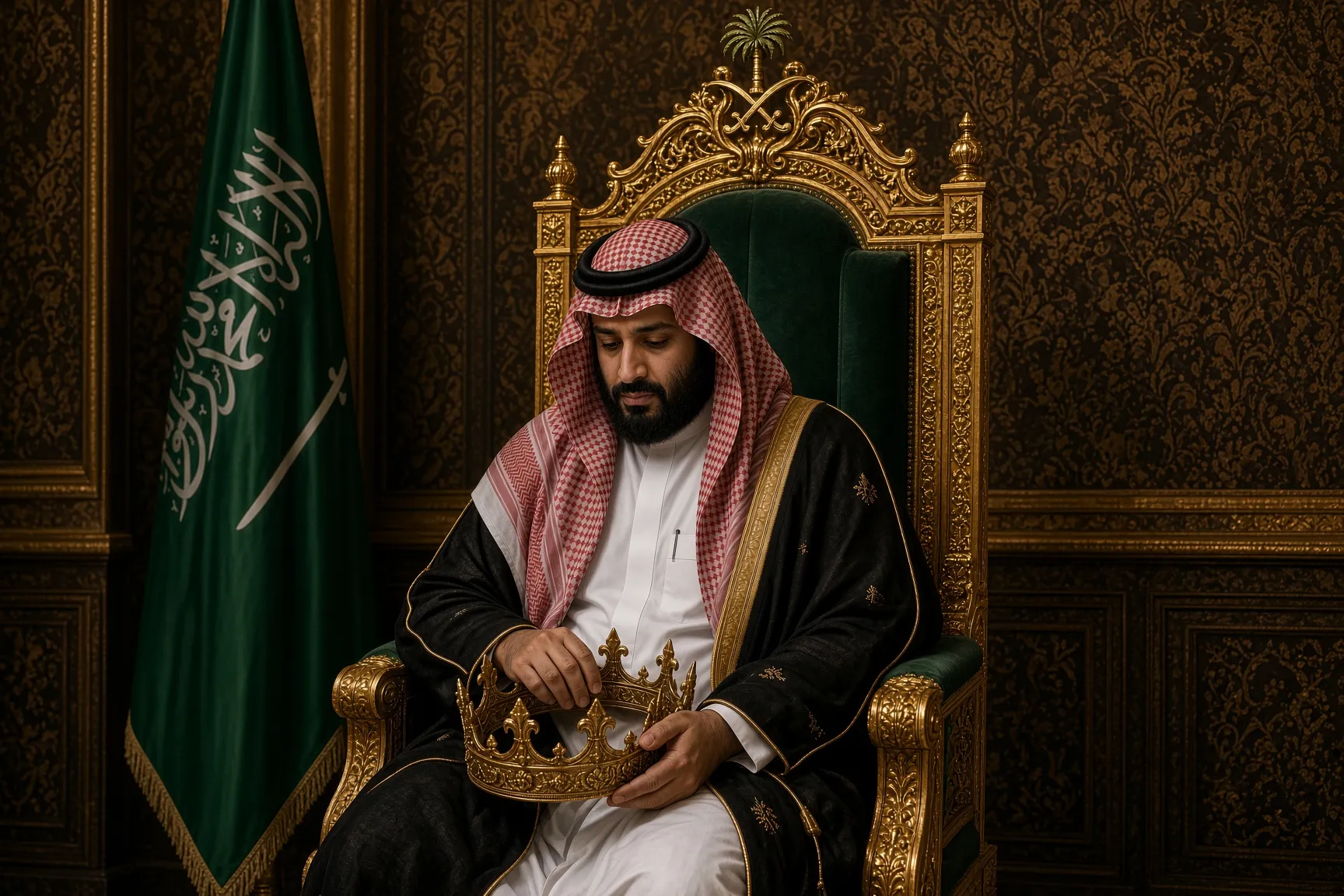
The Crown Prince Has Become a Liability America Can’t Afford
When Washington and Riyadh rolled out their grand bargain last year, the pitch to American business was simple: invest in the kingdom, and the U.S.–Saudi partnership will keep that investment safe. Saudi officials put the total value of investments and agreements between American and Saudi companies at $575 billion. Nvidia landed one of the largest purchase orders in its history, and AMD and the Saudi firm HUMAIN unveiled a $10 billion partnership to build out AI computing in the kingdom. Chevron, Cisco, Qualcomm, Google and Boeing all lined up.
The security architecture was supposed to backstop it all. The two countries signed a Strategic Defence Agreement during Crown Prince Mohammed bin Salman’s November 2025 visit to Washington, and Trump designated Saudi Arabia a major non-NATO ally.
A year later, the promise of stability has collapsed. Between February 28 and March 18 of this year alone, Saudi Arabia was hit with at least 38 missiles and 435 drones. Iranian strikes have targeted Saudi oil refineries. And this month, at least 13 people were killed when the Houthis struck an airport in Riyadh, the deadliest attack on a Gulf country since the U.S.-Israeli war with Iran began. No company can run a data center, a refinery or a supply chain from a capital whose main airport is burning.
American workers and capital are now exposed in a war zone. Every dollar committed on the strength of a stable Saudi Arabia is a dollar at risk.

It Keeps Getting Worse
The common thread is Mohammed bin Salman. His decade in power has been defined by impulsive escalation: the ruinous intervention in Yemen that created the Houthi threat now hammering Saudi cities, the blockade of Qatar, the Ritz-Carlton detentions, and the murder of Jamal Khashoggi. Each crisis was presented as a phase he had outgrown. Each time, the bill arrived later and larger.
Worse, his loyalty to the partnership is in doubt. Even as he collected American guarantees, Riyadh entered a defense pact with Pakistan and Turkiye that analysts see as a realignment reflecting growing doubts about the U.S. as a security guarantor. Washington is carrying the risk while the crown prince hedges.
Pledges have also outrun reality. He promised to raise Saudi investment in the U.S. to $1 trillion but offered no details or timetable, and most of the agreements announced during Trump’s 2025 trip to Riyadh had not been implemented months later.
America’s interest is not in any one prince. It lies in a stable kingdom that is a dependable partner. Saudi Arabia has its own mechanism for succession through the royal family and the Allegiance Council. Washington should make clear, quietly but firmly, that the future of the partnership depends on leadership that ends adventurism, de-escalates in Yemen, and delivers the stability American investors were promised. Washington should support a change in Riyadh before more American capital, and more American lives, become collateral damage.