
The Corporate Ladder Is Being Pulled Up Behind American Workers
Visa programs meant to fill rare skill gaps now routinely fill leadership jobs that Americans have trained for. Congress, not the courts or the White House, has to restore the promise of rising where you work.
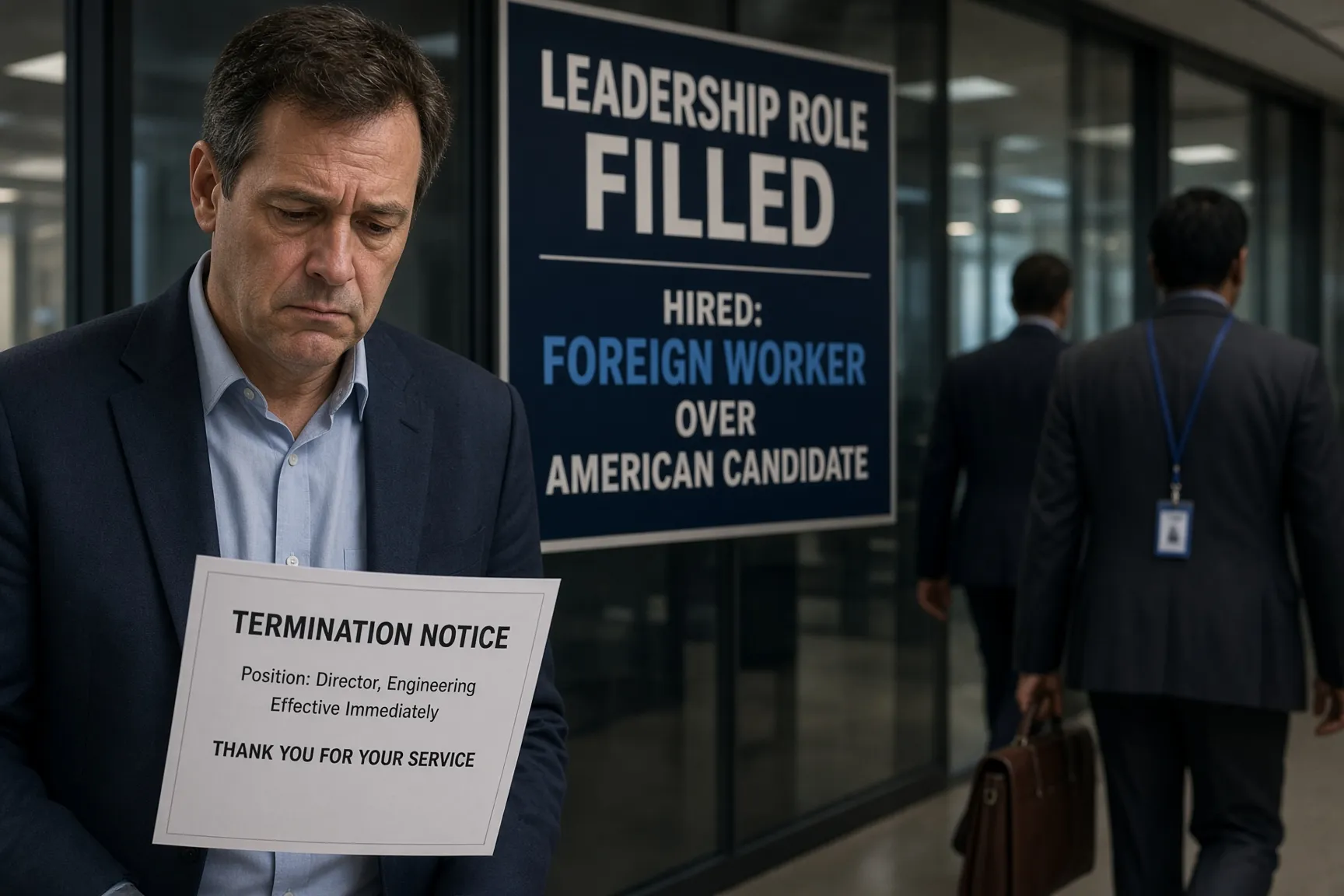
The Broken Ladder
America has always promised that if you work hard here, you can rise here. A machinist’s daughter can become a plant manager. A first-generation college graduate can become a chief technology officer. That promise of upward mobility is one of our most important values, and it is quietly being broken.
Across corporate America, senior technical and management roles are increasingly filled through temporary visa programs rather than by promoting the Americans already doing the work. Programs that were created as narrow exceptions have become routine hiring channels. When a company brings in an overseas manager through an intracompany transfer, the American engineer who trained for that role loses more than a job. The ladder itself is gone.
This is not a partisan complaint. Senators Grassley and Durbin, the top Republican and Democrat on the Judiciary Committee, have argued that major companies are laying off thousands of American workers while filing thousands of visa petitions for foreign workers at depressed wages. Their bipartisan H-1B and L-1 Visa Reform Act would bar employers from filing these petitions for positions where U.S. workers were laid off within 180 days before or after the filing, and would cap visa holders at half of an employer’s workforce. When senators as different as these two agree, the problem is real.
The costs reach well beyond the workers who are displaced. Leadership roles set wages for everyone below them, shape which communities get investment, and decide whether training programs for Americans exist at all. A manager on a temporary visa who depends on the employer for legal status is in no position to push back on layoffs, offshoring, or wage cuts. And when decisions about American plants, hospitals and data centers are made by leaders with no lasting stake in American communities, those communities pay the price.
American Workers Deserve American Workplace Standards
American workers have fought for over a century for protections now written into law: overtime pay, the right to organize, freedom from retaliation, and equal treatment regardless of race, sex, or religion. These aren’t just rules. They reflect a belief that dignity at work is part of the American way of life.
Those protections depend on the people enforcing them day to day, and that’s the front-line manager. When leadership roles are filled through temporary visa channels, companies often skip the training, accountability, and oversight they’d expect of a homegrown hire. A manager whose legal status depends on pleasing the employer has every reason to push teams harder, discourage complaints, and look the other way on unpaid hours or unsafe conditions. Workers under that manager, American and foreign alike, are left with fewer protections in practice than they have on paper.
Congress can address this directly. Any employer sponsoring a visa for a supervisory role should have to certify that the hire has completed training in U.S. labor and anti-discrimination law. Complaints involving visa-sponsored managers should trigger Labor Department review. Companies with repeated violations should lose sponsorship privileges. Every worker in America deserves a boss who respects the rules Americans fought for.

Accountability
The executive branch has tried to act on its own, but those actions have not lasted. The $100,000 H-1B fee announced in September 2025 was ruled unlawful by a federal court, and the First Circuit reinstated that ruling in July 2026, so the fee is not currently required. The judge found the charge was effectively a tax that only Congress has the authority to impose. The message is clear: lasting reform has to come from legislation.
Congress should act this session to:
- Require employers to recruit and consider qualified Americans, including internal candidates, before sponsoring visas for management and senior technical roles
- Prohibit visa sponsorship for any role tied to recent layoffs of American workers
- Set wage floors high enough that visas cannot be used to undercut American pay
- Tighten the L-1 program so it cannot become a back door for replacing American managers
- Require public reporting on visa-holder share of leadership positions at large employers
None of this closes America to talent. It restores the original bargain: these programs exist to fill gaps, not to replace Americans. Our leaders should be developed here, promoted here, and accountable here. Congress has the bills in front of it. It should pass them.