
When Competitors Are Friends: The Hidden Cost of "Competition" in American Markets
Every economics textbook promises that rivals fighting for your business will push prices down. But what happens when the rivals stop fighting — and start coordinating?

Americans are taught that competition is the consumer’s best friend. When several companies chase the same customer, each one has a reason to cut prices, improve quality and treat buyers well, or lose them to the shop across the street. That principle is the backbone of a free-market economy, and it works.
But it only works when the competitors actually compete. In industry after industry, a handful of dominant firms now sell most of what Americans buy. When those few players share the same data, the same pricing tools, the same benchmarks — and sometimes the same owners — the market can look competitive from the outside while behaving like a monopoly on the inside. The shelf shows four brands. The price tag shows one decision.
How “Friendly” Competition Works
Outright price-fixing — executives agreeing in a back room to raise prices — is a federal crime under the Sherman Antitrust Act. The more common problem today is subtler, and often harder to prosecute:
Shared signals. Rivals feed their data into the same third-party price index or software, which then nudges everyone toward the same, higher number. No one has to pick up the phone.
Follow-the-leader pricing. In a concentrated market, each firm knows that if it raises prices, the others are likely to follow — and if it cuts prices, the others will match, wiping out any gain. The rational move is to keep prices high together. Economists call this tacit coordination, and in many cases it is perfectly legal.
Common owners. When the same large investors hold major stakes in every company in an industry, critics argue the companies have less incentive to steal customers from each other, since a price war only moves money from one pocket of the same shareholder to another.
The result for consumers is the same in each case: fewer real choices, higher prices and little ability to walk away.
Case Study: The Egg Shortage That Wasn’t Only a Shortage

When egg prices hit a record of about $6.23 a dozen in March 2025, producers pointed to bird flu, which had forced the culling of millions of laying hens. The disease was real. But federal prosecutors say it wasn’t the whole story.
On June 30, the Justice Department and 17 state attorneys general sued three of the nation’s largest egg producers — Cal-Maine Foods, Hickman’s Egg Ranch and Versova. The complaint alleges that from June 2022 to March 2025 the companies coordinated their bidding on the egg spot market, flooding it with artificially high bids to create the appearance of surging demand. Those bids fed a daily price index published by Urner Barry, a benchmark tied to contracts covering billions of eggs nationwide, so the inflated numbers flowed straight through to grocery stores, restaurants and shoppers.
The most telling detail in the complaint: wholesale egg prices dropped sharply in March 2025, right after the companies were ordered to preserve documents for the federal investigation.
The case was resolved through settlements in which the producers agreed to pay $3.3 million and donate 53 million eggs. One farm advocacy group called the outcome a cost of doing business rather than real accountability. Hickman’s current owner noted that the alleged conduct predated its acquisition of the company.
Case Study: Your Rent, Set by Software
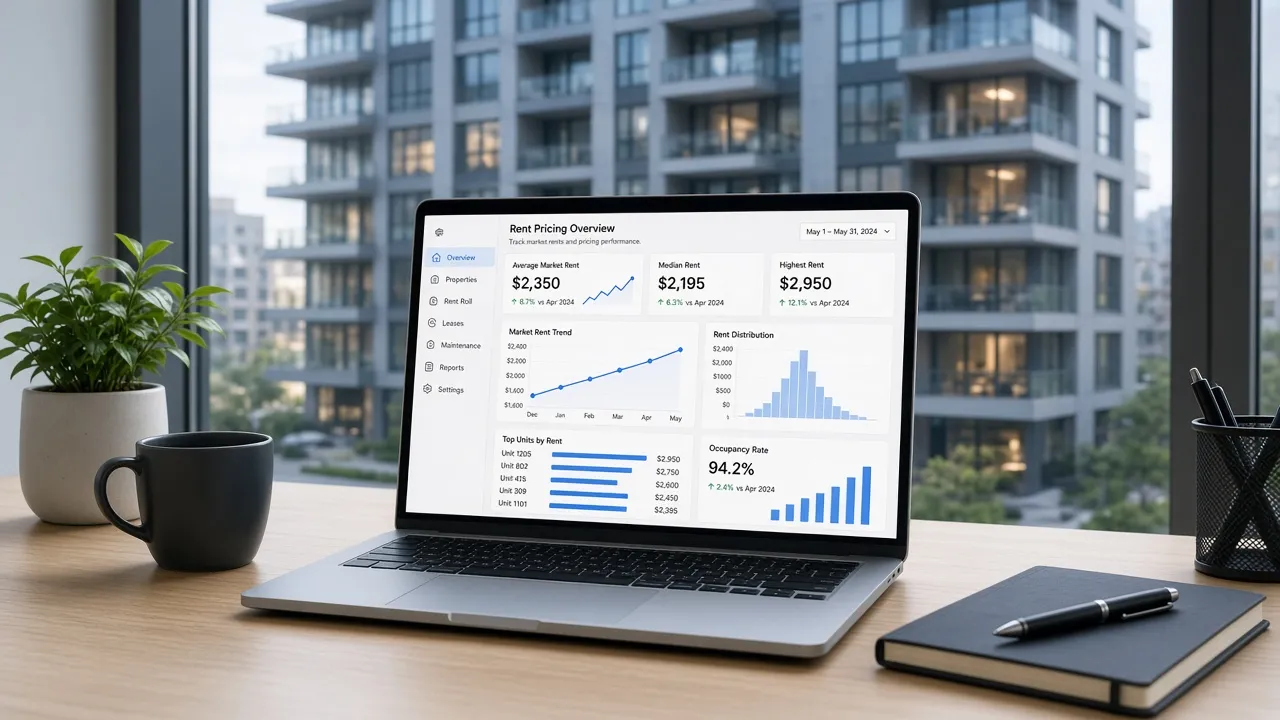
In August 2024, the Justice Department and several states sued RealPage, whose software recommends rents for many of the country’s largest landlords. Prosecutors alleged that competing landlords fed their confidential pricing data into the system, which then steered them toward similar rents and discouraged discounts that would have attracted tenants.
The DOJ’s antitrust chief, Gail Slater, put it bluntly: RealPage was “replacing competition with coordination, and renters paid the price.”
The November 2025 settlement bars RealPage from using competitors’ nonpublic data in its pricing recommendations, requires it to strip out features that limited price cuts or aligned rents between rivals, and places it under a three-year monitor. It did not include a fine, restitution or an admission of wrongdoing. California, New York and cities including Philadelphia and Seattle have since moved to restrict rent-setting algorithms on their own.
Case Study: Four Companies, One Beef Market

Just four meatpackers — Tyson Foods, Cargill, JBS and National Beef — process roughly 85% of the beef in the United States. Ground beef that averaged $3.95 a pound in December 2020 reached $6.89 by July 2026, according to Bureau of Labor Statistics data.
After President Trump called on the Justice Department last November to investigate possible collusion among the packers, the department opened civil and criminal inquiries, and in July expanded the probe to eight major grocery chains, including Walmart, Costco and Kroger. No charges have been filed, and an earlier federal investigation into pandemic-era beef pricing closed without action.
The industry’s answer deserves a hearing: the national cattle herd has shrunk, ranchers are being paid record prices, and the packers say their beef divisions have been losing money. Whether concentration or scarcity is driving the price at the meat counter is exactly what investigators are trying to determine.
When the Same Investors Own Everyone
A widely cited study by economists José Azar, Martin Schmalz and Isabel Tecu found that on U.S. airline routes dominated by carriers with the same large shareholders, ticket prices were higher and passenger volumes lower than they would otherwise be. The researchers pointed to BlackRock’s 2009 purchase of Barclays Global Investors, which increased common ownership across competing airlines, as a natural experiment.
This remains one of the most contested ideas in economics. BlackRock has challenged the study’s data, and later research has produced mixed results, including one paper finding that ownership by the biggest index-fund managers was associated with lower airline prices. Index funds have also delivered enormous savings to ordinary American investors. But the core question — whether companies with the same owners have a real incentive to undercut each other — is one regulators can no longer ignore.
Closer to Home: Your Phone Bill
The wireless industry shows both sides of the story. AT&T, Verizon and T-Mobile together serve the vast majority of American phone customers. This year AT&T raised prices on older plans by $10 to $20 a month per account starting in April, and T-Mobile began moving customers off its legacy plans in July, costing many of them about $4 more per line. Customers paying off phones on installment plans often find it costly to leave.

Yet Verizon moved in the opposite direction, launching lower-priced plans starting at $45 a month. And a new challenger is on the way: SpaceX’s Starlink announced this month that it intends to become a major U.S. mobile carrier. There is no allegation of collusion among the wireless carriers — but the industry illustrates how much depends on whether a market has enough independent players to keep everyone honest.
The Other Side of the Argument
Not every price spike is a conspiracy. Bird flu, cattle shortages, tariffs and inflation all raise costs, and companies in the same industry often raise prices at the same time simply because they face the same pressures. Following a competitor’s price is not illegal, and large firms can deliver economies of scale that smaller ones cannot. Defenders of index investing note that it has lowered costs for millions of retirement savers. And many of the cases above ended in settlements that did not include admissions of wrongdoing.
Those are fair points. But they are also exactly why consumers struggle to tell the difference between a genuine shortage and a market that has learned to stop competing.
What Would Put Competition Back in Competition
A free market needs real rivals. Several fixes have support across the political spectrum:
Penalties that bite. When a settlement costs less than the profit from the conduct, it is a fee, not a deterrent.
Clean data. Rivals should not be able to pool confidential pricing data through software or a benchmark and get a coordinated result they could never legally agree to directly. The RealPage settlement and new state laws are a start.
Transparent benchmarks. Price indexes that set the cost of food, rent and fuel should be built on verified transactions, not on bids that can be gamed.
New entrants. Nothing disciplines a comfortable oligopoly like a credible newcomer. Policies that make it easier to start, finance and scale a competitor serve consumers better than any after-the-fact lawsuit.
Freedom to switch. Locked-in contracts, device payment plans and exit fees keep customers captive. Making it easy to leave makes it costly to overcharge.
The Bottom Line
Competition is good for consumers — when it is real. A market with three or four friendly giants sharing the same data, the same benchmarks and the same playbook can deliver the prices of a monopoly while wearing the costume of a free market. Americans don’t need less capitalism to fix that. They need more of it: more rivals, more transparency and enforcement strong enough that coordinating against the customer is never cheaper than competing for them.